
DesignShift Practice Session: DesignShifter Archetypes
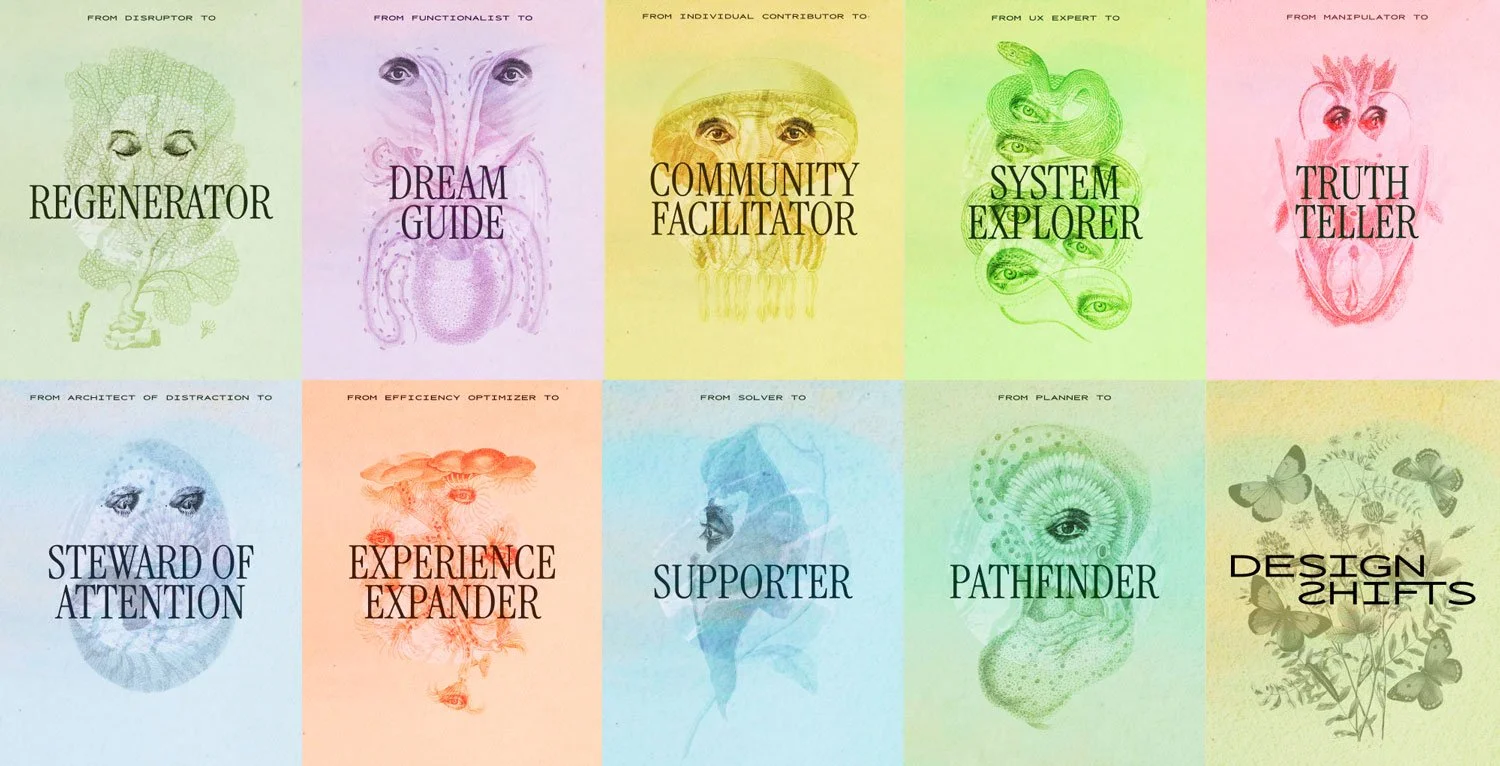
In October 2025, we hosted the first in-person DesignShifts workshop at RCA in London. Together, we explored future roles of designers.
Session overview
What is the role of designers in a future that doesn’t need more things?
For decades, designers have been defined by the output of their work. Pixel-perfect interfaces, innovative user flows, and striking visual systems have shaped both our education and our professional recognition. We have been categorized as interaction designers, fashion designers, communication designers, and more.
These roles have served us well. They helped shape industries, create access, and bring beauty and clarity into people’s lives.
Yet as we find ourselves in the middle of climate collapse, inequality, democratic erosion, and a mental health crisis, these roles now feel too narrow. In many cases, they are even complicit in fueling the very problems we claim to solve.What is the future role of designers that helps heal and regenerate our planet? How do we adapt our work to address today’s interconnected crises of climate change, housing, justice, and meaning?
Together, we :
Discovered new archetypes of designers for a post-consumption world
Reimagined how design can respond to interconnected global crises
Defined how we can shift our perspectives, postures, practices, power, and purpose to aid the transition toward a better tomorrow.
The session was hosted in person alongside Hosan Lee, a designer and student at the Design Futures program at RCA.
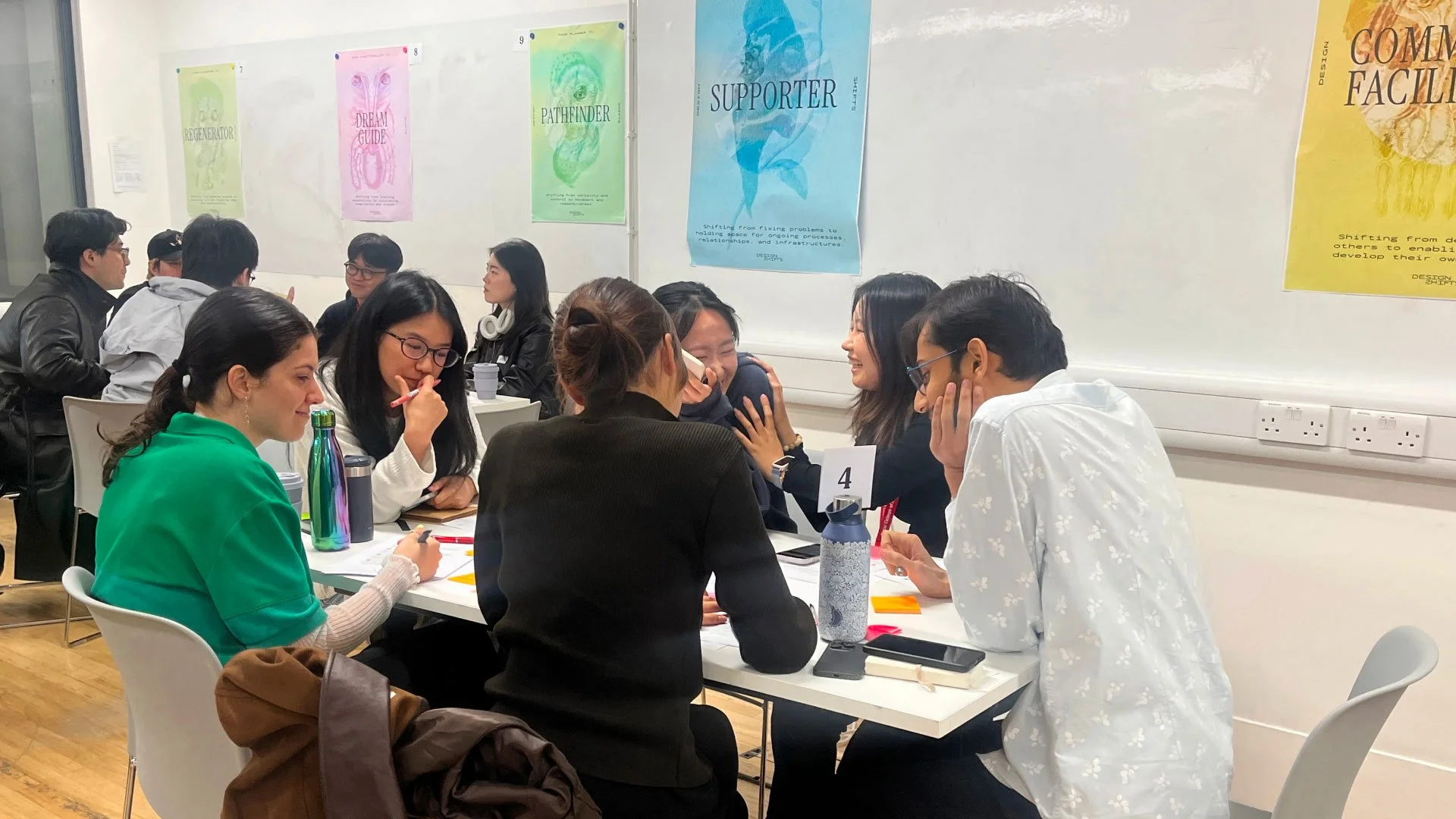
People selected one archetype and explored what it would mean in practices. We used the 5 p’s of shifting to dive deeper:
Perspectives: What we believe
What mindsets or values would we hold?
How would we cultivate and share these perspectives with others?
How would our beliefs shape the way we approach challenges and opportunities?
Postures: How we show up
How would we show up in our professional roles?
How would we collaborate with others?
How would we demonstrate integrity, empathy, and openness in our work?
Practices: How we work
What tools and methods would we apply in our process?
How would we ensure our practices reflect our values and goals?
How would we continue learning and improving the way we work?
Power: Who designs
Who would be considered part of the decision-making process?
Who would hold influence or authority, and how would it be shared?
How would we create space for more voices and perspectives in shaping outcomes?
Purpose: What our work is in service of
What is the ultimate goal or impact of our work?
Who or what does our work serve?
How would we align our purpose with creating positive and lasting change?
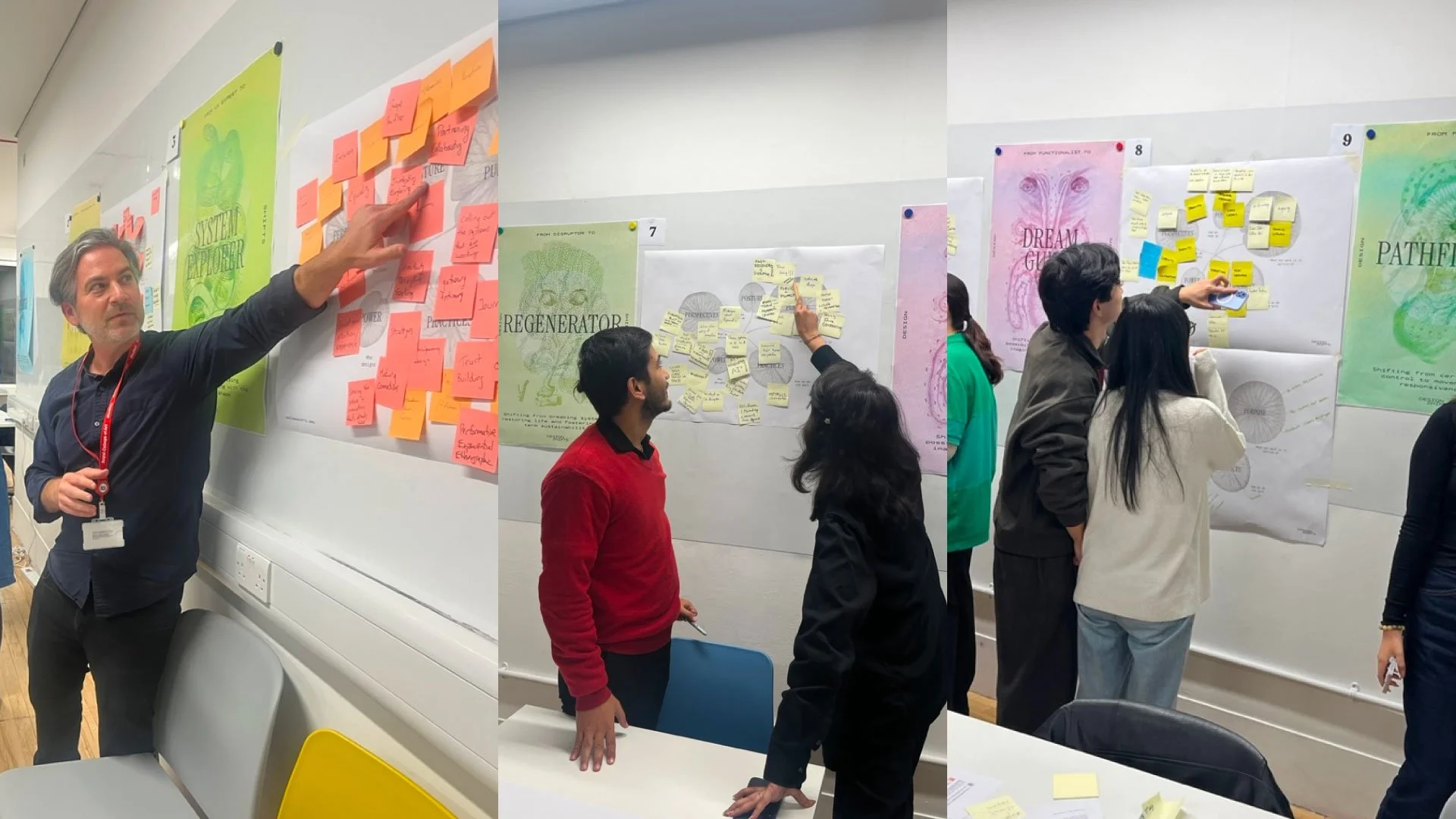
Here are a few questions and reflections that have stayed with me after our session:
On power: When we think about power, we should ask who is being exploited. Is it the workers, the consumers, the community members, or perhaps all of them at once? Identifying this can help us disrupt harmful power structures and uncover deeper truths.
On disruption: The discussion about what it means to be a disruptor also stood out to me. Someone asked if being a disruptor is the opposite of being a regenerator. The more I think about it, the more I believe disruption can also be a positive force, especially when it challenges the status quo in the service of renewal or justice.
On participation: We emphasized that when people are given power, they want to contribute, as shown in the example of the Russian bill redesign. This reminds us that participation is often less about mindset and more about access.
On dreaming: Dreamers are leaders. We all have the capacity to dream and, in doing so, we develop the capacity to lead.
Ida and Hosan
