
From Frictionless
to Meaningful
As designers, we've been trained to eliminate friction at every turn. Don't make users think. Make solutions invisible. Optimise for speed. But what if friction isn't always the enemy?
What if, in our rush to make everything seamless, we're removing the very pauses that create meaning, build trust, and help people make decisions they won't regret?
The page explore how we can design with, not against friction.
“Snakes need friction to move forward. They press against surfaces, grip, and even shift their own scales to generate traction. Without friction, they’re stuck.”
8 benefits of friction
-
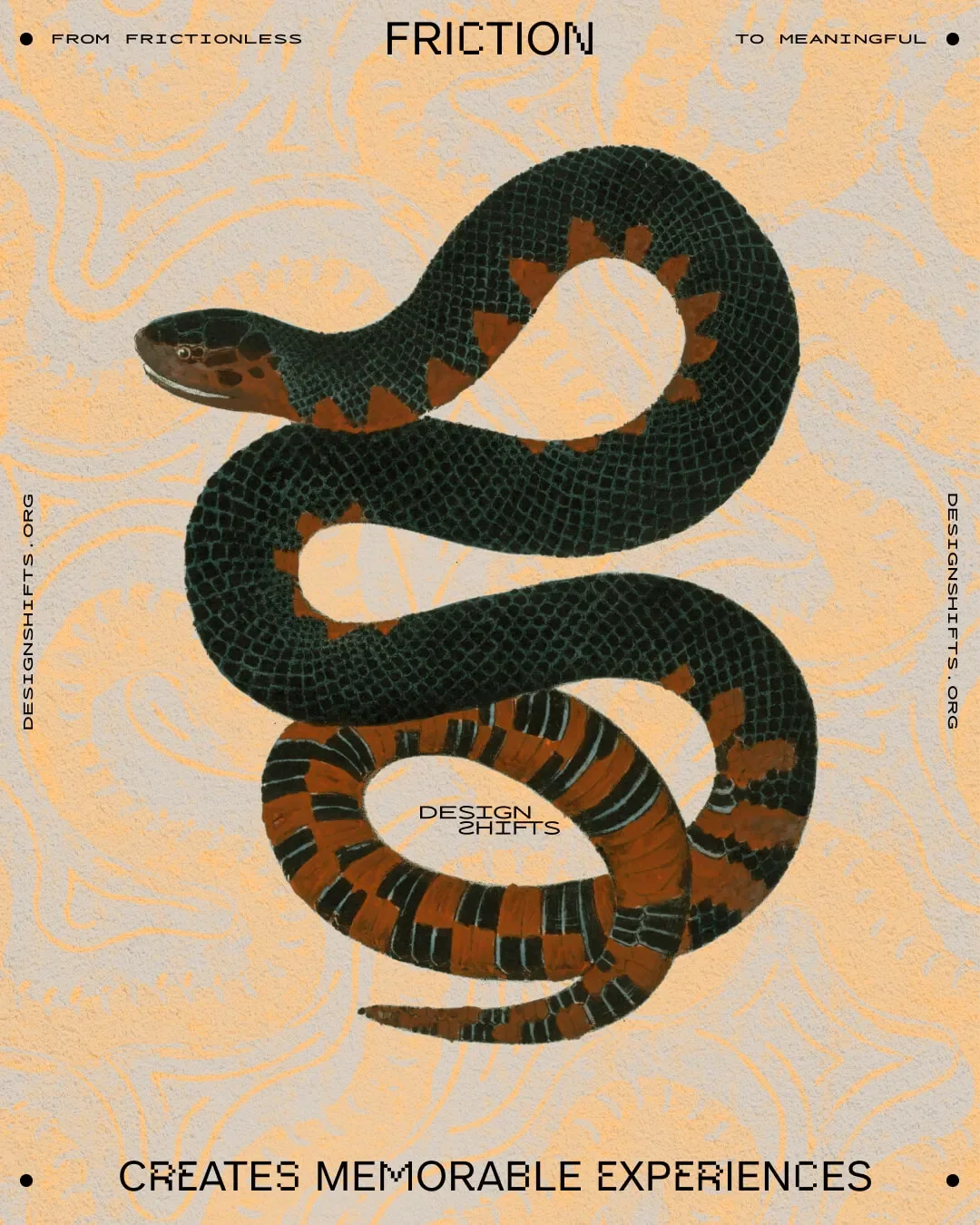
Friction creates memorable experiences
The most memorable experiences are often the ones that required effort. The meal you struggled to cook but finally perfected. The project that pushed you to your limits but resulted in work you’re truly proud of.
Example: assembling your own furniture instead of receiving it fully built.
-
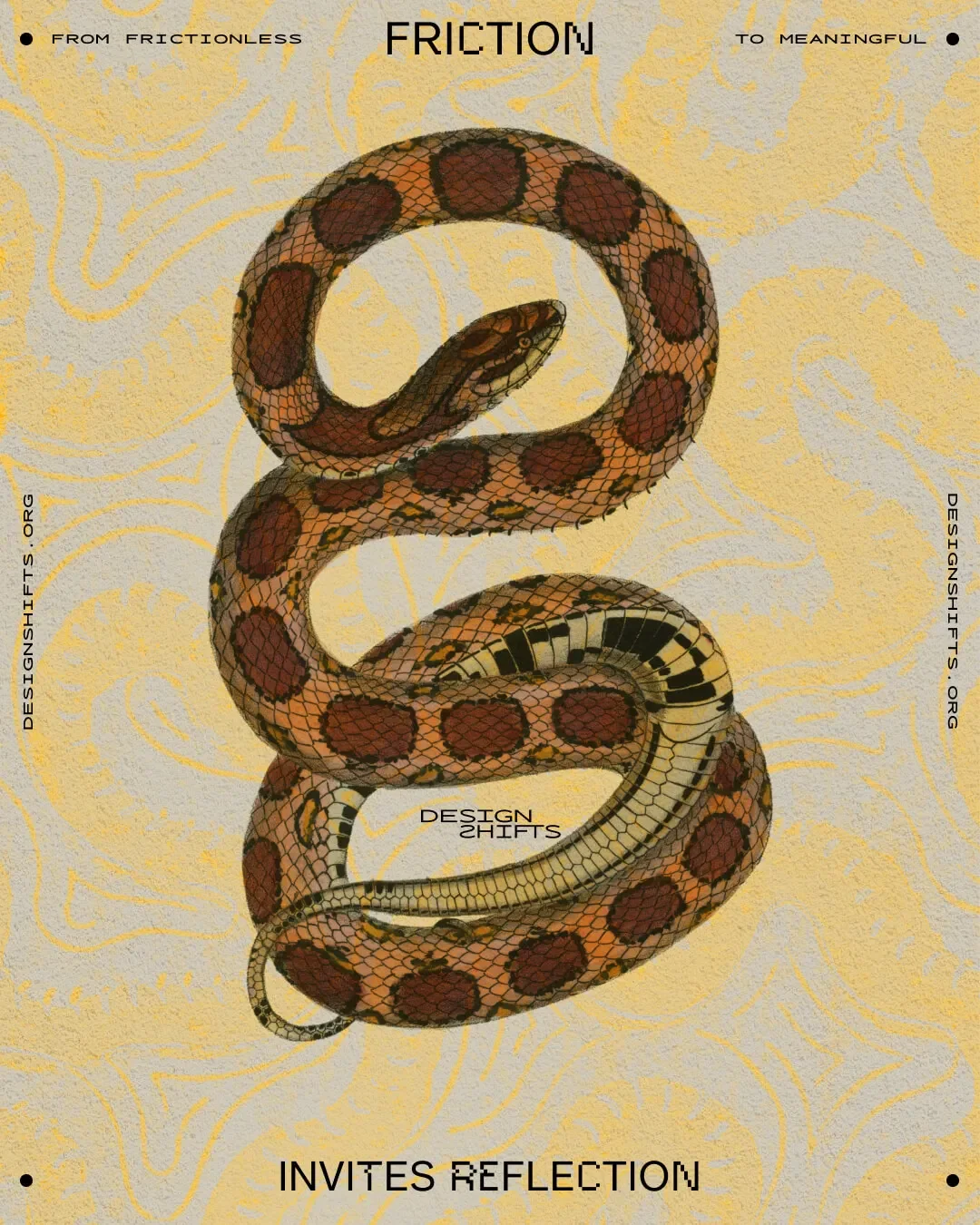
Friction invites reflection
Some decisions deserve a pause. Friction can interrupt impulsive actions and create a moment to think. It gives people space to consider consequences, values, and alternatives before moving forward.
Example: a checkout that asks users to confirm whether they really want to buy another item. -
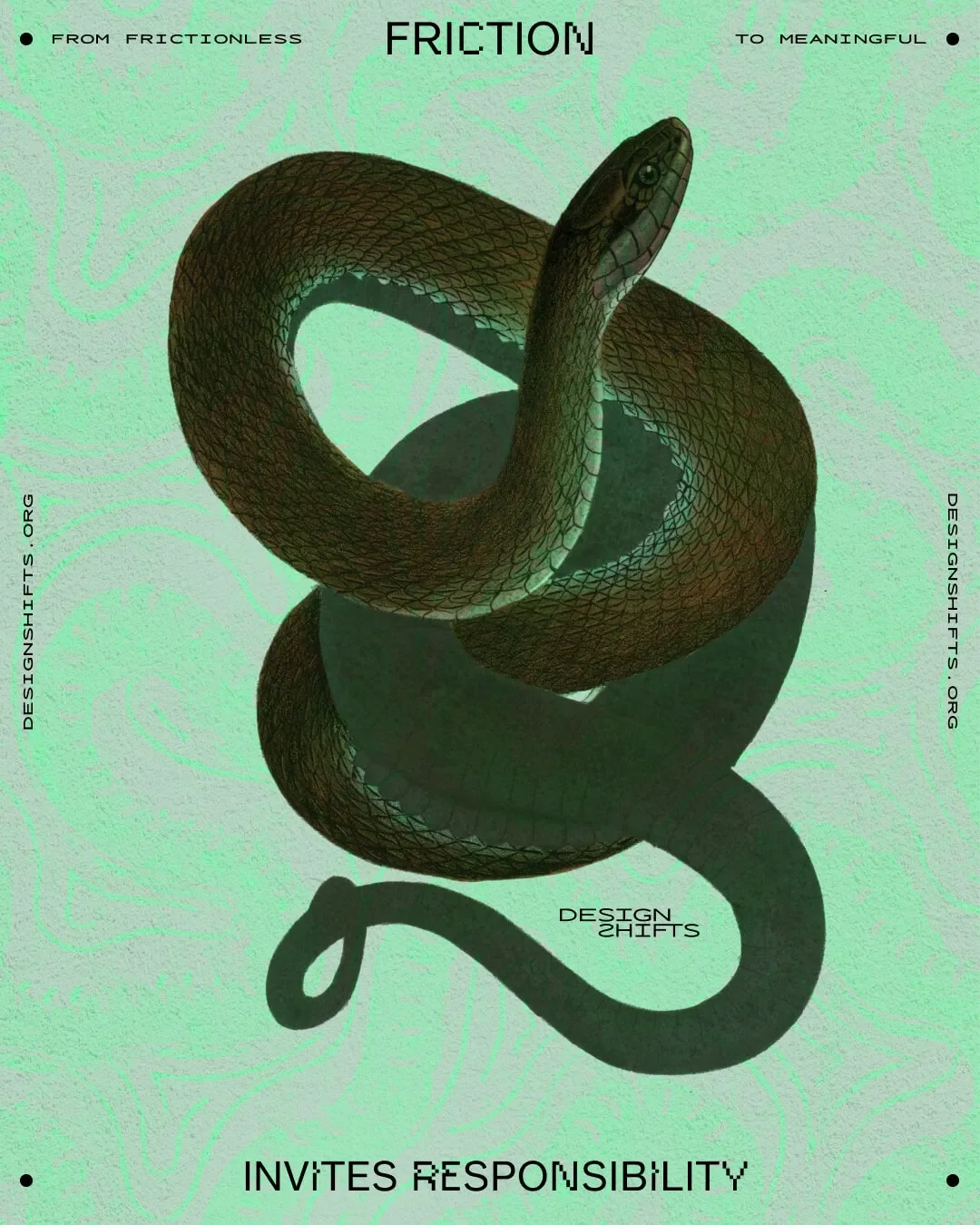
Friction invites responsibility
When decisions move too fast, responsibility can disappear. Adding friction can encourage accountability and invite people to consider the impact of their choices before acting.
Example: a design review step asking “Who might this harm?” before launching a product -
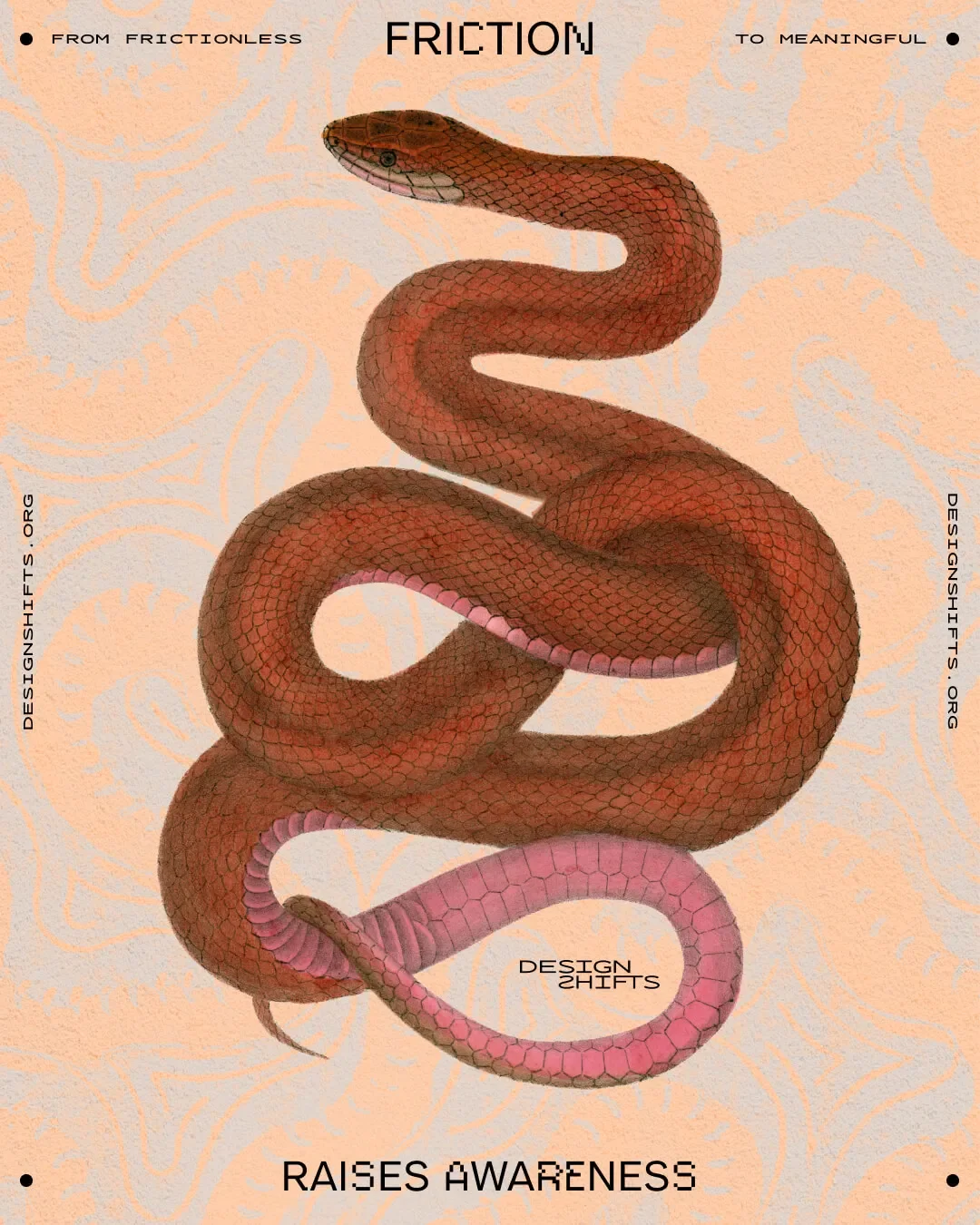
Friction raises awareness
Friction can reveal what usually stays hidden. It can draw attention to inequality, environmental impact, or social consequences that smooth systems tend to obscure.
Example: uneven chocolate pieces designed to highlight inequality in the cocoa industry. -
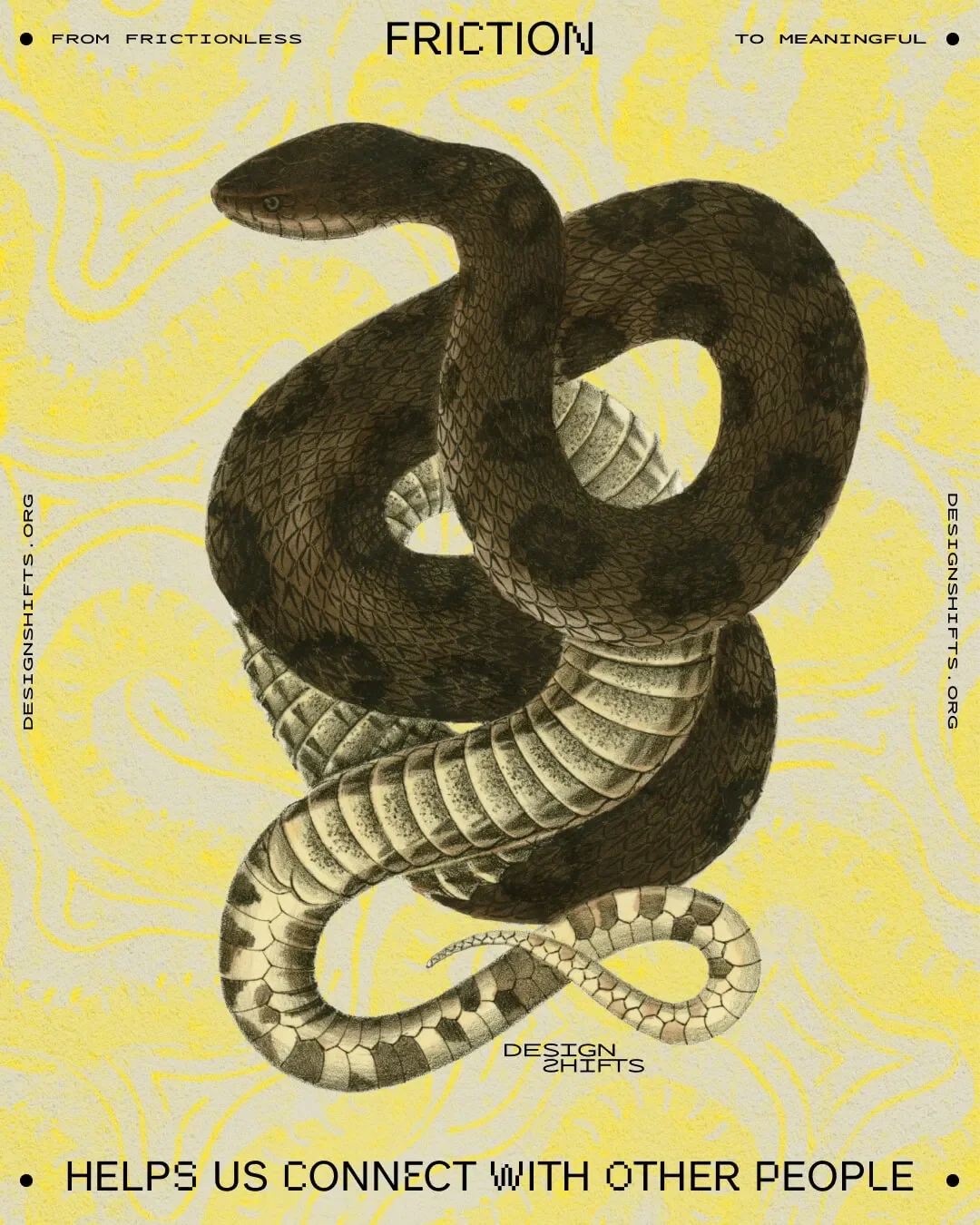
Friction helps us connect with other people
Human relationships often require time and presence. When everything becomes frictionless, we risk removing the moments where people meet, talk, and care for one another.
Example: a service that encourages conversation with staff instead of full automation. -
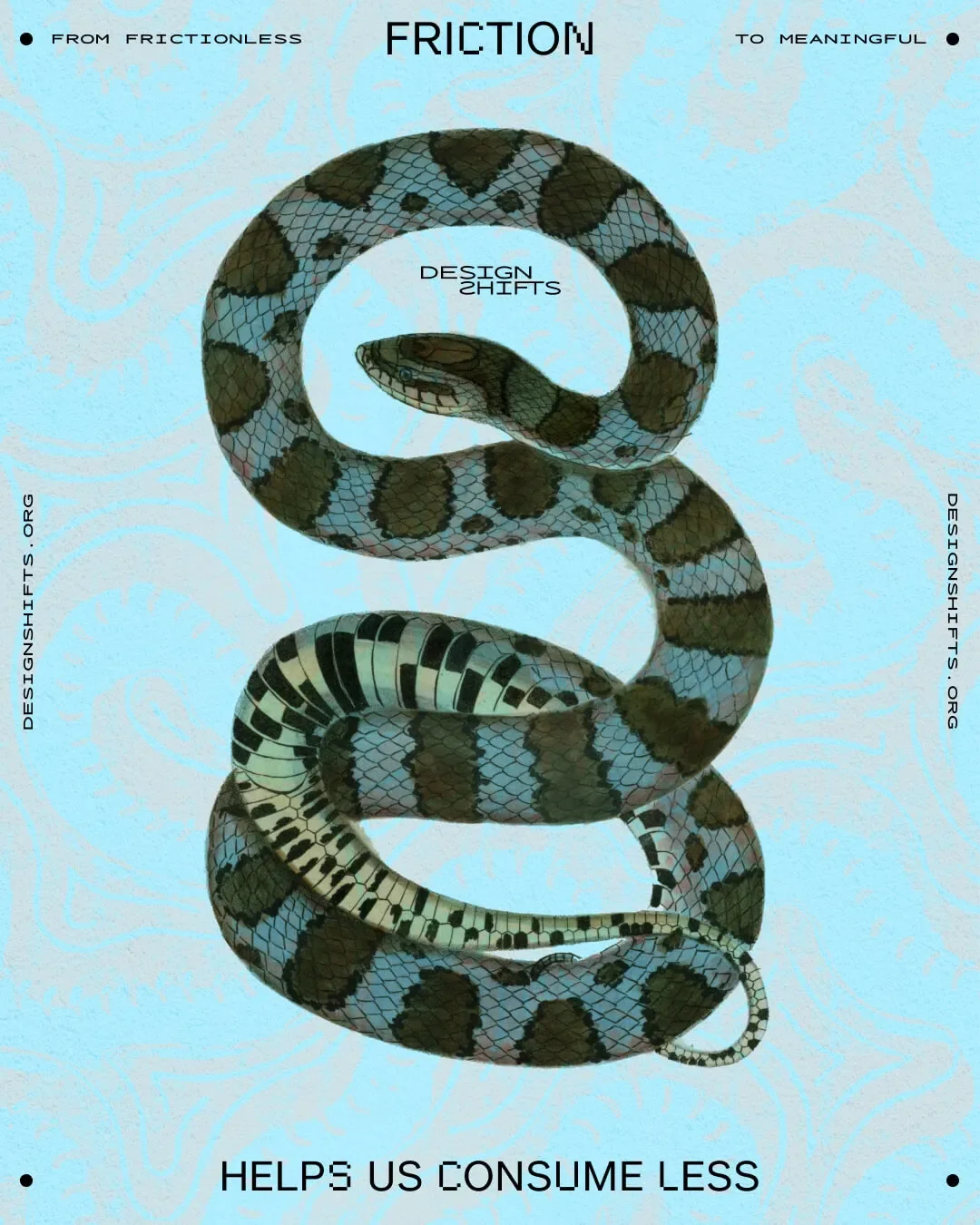
Friction helps us consume less
Friction can slow down mindless convenience. It creates a moment to ask: Do I really need this? Sometimes a little effort helps us make more intentional choices.
Example: visiting a local store instead of ordering instantly online. -
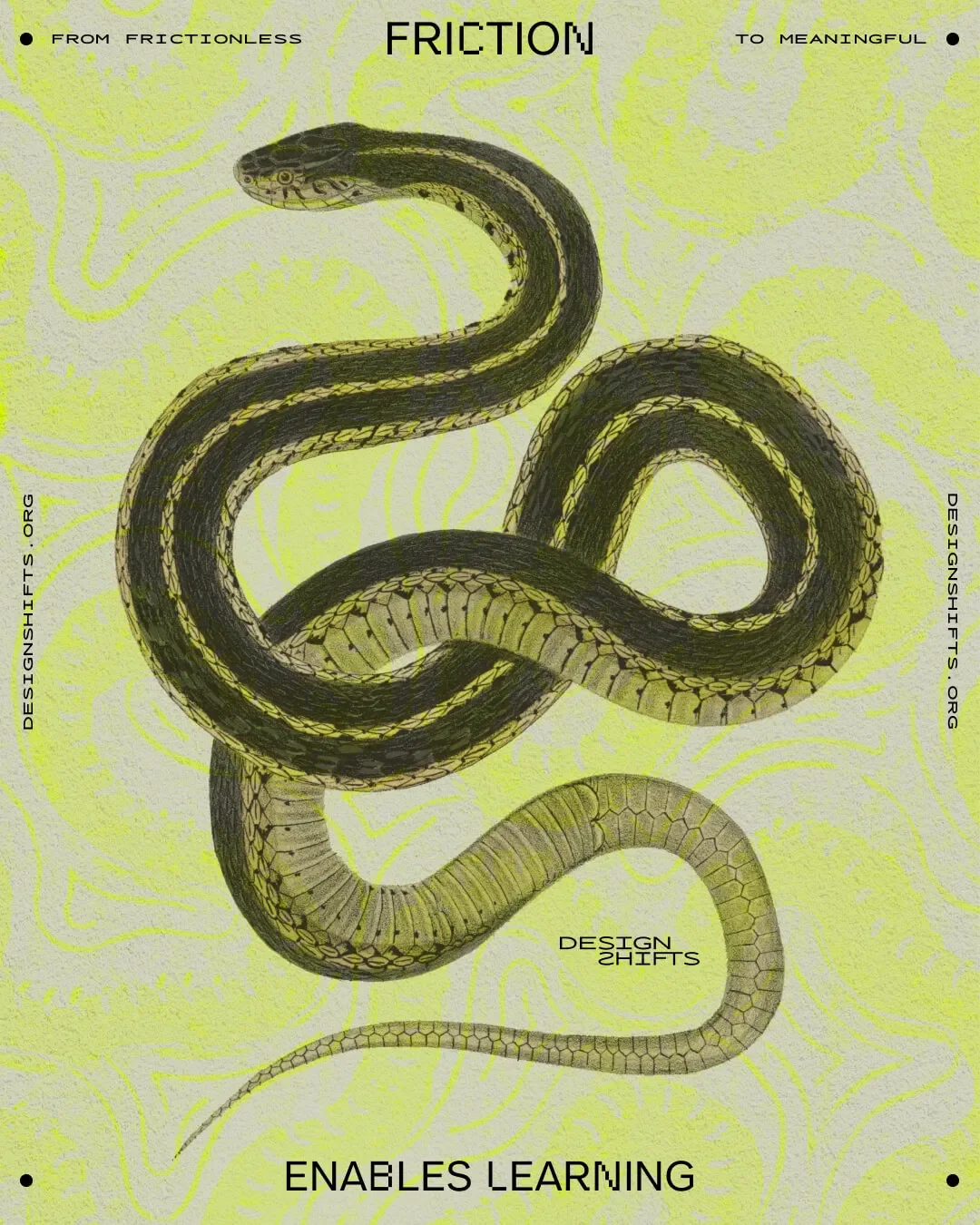
Friction enables learning
Struggle is often part of understanding. When everything becomes instant and effortless, we lose the process that helps knowledge stick. Friction can deepen learning.
Example: practicing a language instead of relying entirely on automatic translation. -
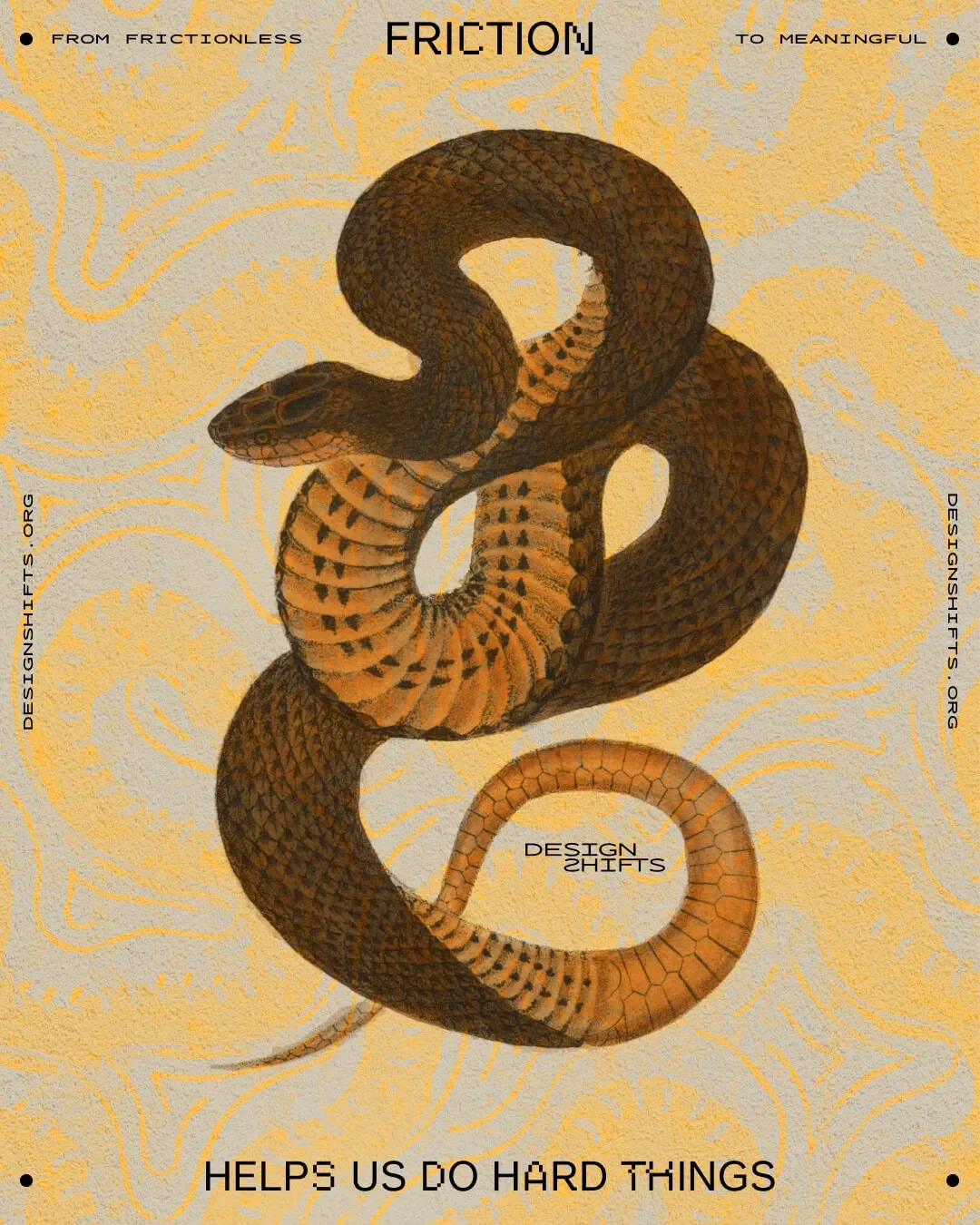
Friction helps us do hard things
Challenges build strength. Experiences that require persistence can help people develop confidence, capability, and endurance over time.
Example: completing a difficult hike rather than taking the easiest rout
From Point to Pause:
Not all friction is the same. Some friction creates obstacles and frustration, while other friction can add value, reflection, and human connection. The first step in designing intentionally is understanding the difference between Friction Points and Friction Pauses.
Friction Point
Friction points are barriers that get in the way of what should be simple and straightforward.
Characteristics:
Quick - Should take seconds or minutes, not hours
Transactional - Focused on completing a task efficiently
Low-stakes - The decision is reversible or has minimal consequences
Fact-based - Requires information, not reflection
Efficiency-driven - Speed and ease are the primary values
Friction Pause
Friction pauses are intentional slowdowns that create space for meaning, reflection, and human connection.
Characteristics:
Slow - Takes time, can't be rushed
Relational - Focused on human connection and understanding
High-stakes - The decision has significant consequences
Feeling-based - Requires emotional processing, not just information
Meaning-driven - Depth and care are the primary values
Our job as designers is not to eliminate all friction or to add it everywhere. It is to be intentional. To know when speed serves our users and when slowness does.
What feels like a meaningful pause to one person can feel like a frustrating barrier to another. Design with that humility in mind.
The goal has never been to make everything frictionless. It is to design experiences that are fast when they need to be, and meaningful when it matters most.