HOW MIGHT WE TO AT WHAT COST
A tool for responsible innovation
This tool emerged from a growing tension in design and technology: we are incredibly good at asking “How might we?”, but far less practiced at asking “At what cost?”
For years, industries have been shaped by the mindset of moving fast, scaling quickly, and optimizing for growth. But as the impacts of technology ripple through mental health, communities, labor, and ecosystems, it has become clear that possibility alone is not enough.
Inspired by conversations around responsibility, unintended consequences, and systemic harm, this tool invites a more reflective design practice. One that helps individuals and teams explore not only what could be created, but who it affects, what it reinforces, and what futures it makes more likely.
This activity is designed for you to reflect deeply and thoughtfully on an idea, project, or product you’ve worked on or are considering.
Start by imagining something you have created, contributed to, or are thinking about developing. Write it down or keep it in your mind.
Take a piece of paper or any other tool you want to use for notes. Create one section for “How Might We” and one section for “At What Cost”.
Review the questions below and start answering each of the questions from a possibility and responsibility lens.
Take your time with each prompt. This is your opportunity to think critically and honestly, helping you make more informed and responsible choices.
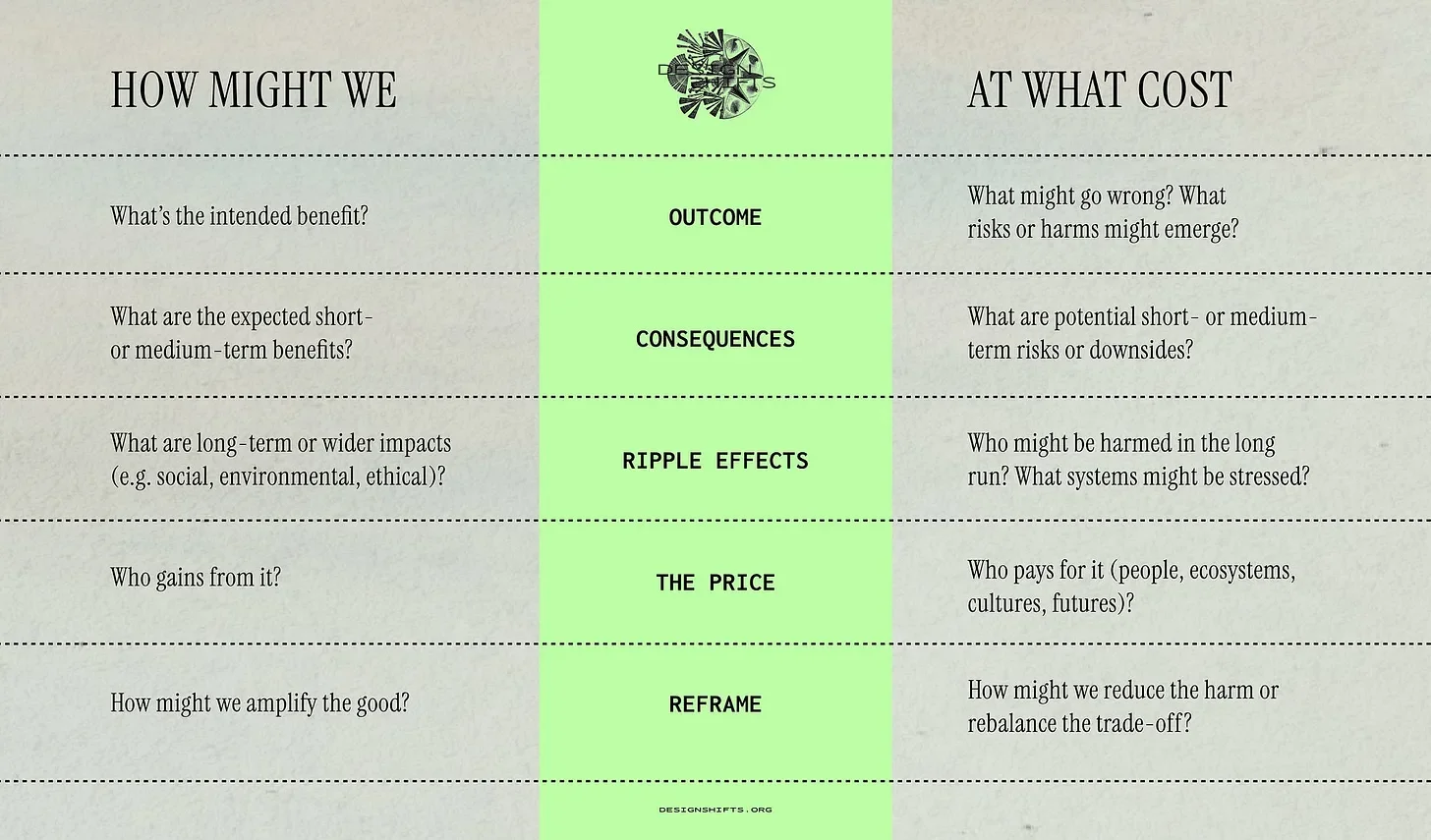
The questions to ask
How might we (exploring possibility through the lens of curiosity)
Outcome: What’s the intended benefit?
Consequences: What are the expected short- or medium-term benefits?
Ripple effects: What are long-term or wider impacts (e.g. social, environmental, ethical)?
The price: Who gains?
Reframe: How might we amplify the good?
At what cost (exploring responsibility through the lens of criticality)
Outcome: What might go wrong? What risks or harms might emerge?
Consequences: What are potential short- or medium-term risks or downsides?
Ripple effects:Who might be harmed in the long run? What systems might be stressed?
The price: Who pays for it (people, ecosystems, cultures, futures)?
Reframe: How might we reduce the harm or rebalance the trade-off?
By asking yourself “How Might We” along with “At What Cost” you will gain clarity on who stands to gain or lose, what trade-offs might exist, and how you could amplify positive impacts while reducing negative ones