
Explore DesignShifts
Here, you’ll find the DesignShifts we’re exploring both in theory and in practice. Each topic explores Shifting the posture, power, perspective, practice, and the purpose of design.
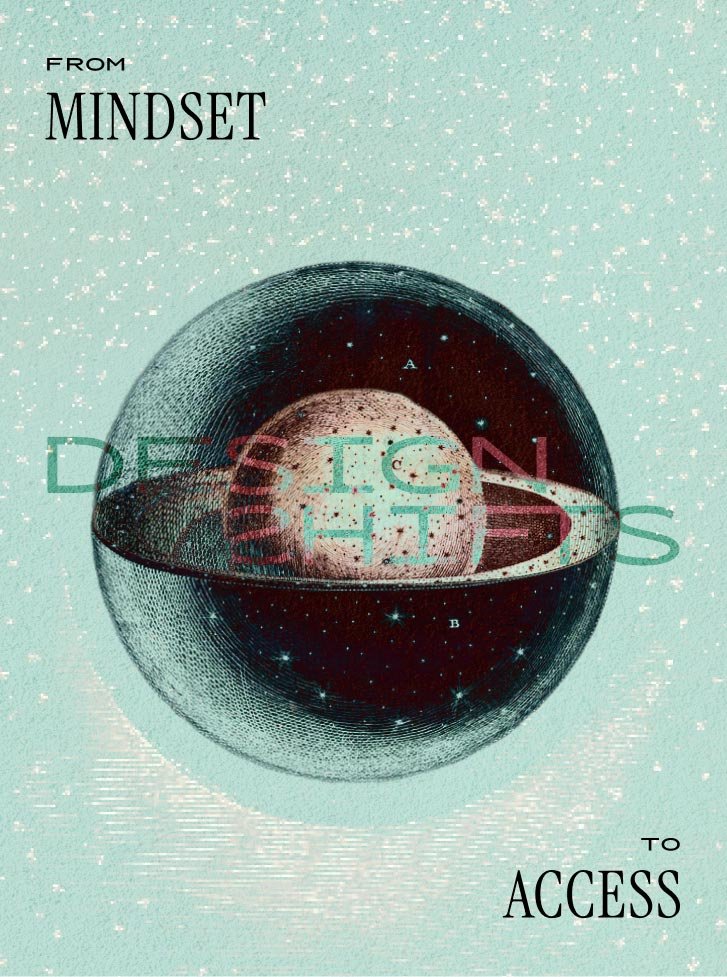
DesignShift: From Mindset to Access
How do we design sustainable change? We focus less on mindset and more on access. We’re told that if we push ourselves, develop courage, and become disciplined we’ll get that promotion, land that job, or achieve the perfect body. However, success or behavior change is less about mindset and more about access. Access to the right conditions. Access to the right relationships. Access to money.
DesignShift: From Mindset to Access.
Rather than telling people to recycle, what if we make recycling easier? Rather than telling people to eat healthy, what if we give people access to affordable and healthy food? Rather than telling people to walk more, what if we create pedestrian friendly cities? Rather than telling people what to do, what if we created the conditions where doing the right thing is easy? Removing barriers. Opening doors. That is how we design sustainable change.
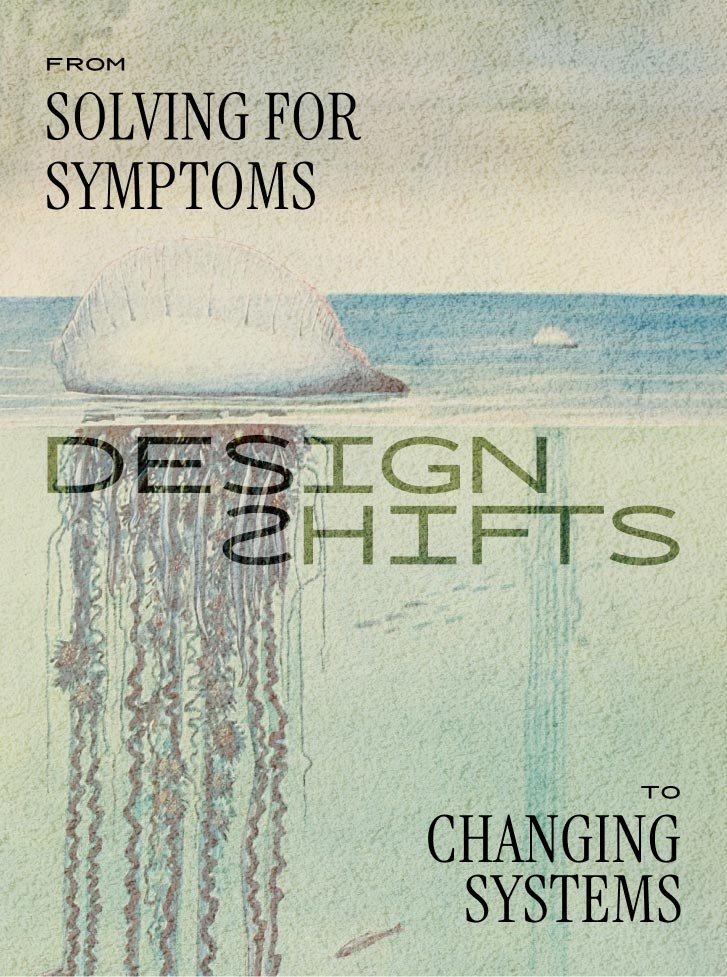
DesignShift: From Solving For Symptoms to Changing Systems
“To expect ourselves to change without changing the environment in a dopamine overloaded world is to expect ourselves not to be human.”
Recently I listened to the podcast "The Path to Enough" where the Psychiatrist Anna Lembke discussed the addictive nature of our devices and how our behaviors are influenced by the environment we find ourselves in. As a designer passionate about designing for real human needs, this quote hit home for me.
DesignShift: What if… rather than solving for individual symptoms, we started changing the system that is actually holding us back? What if we designed environments are actually conducive to being human?
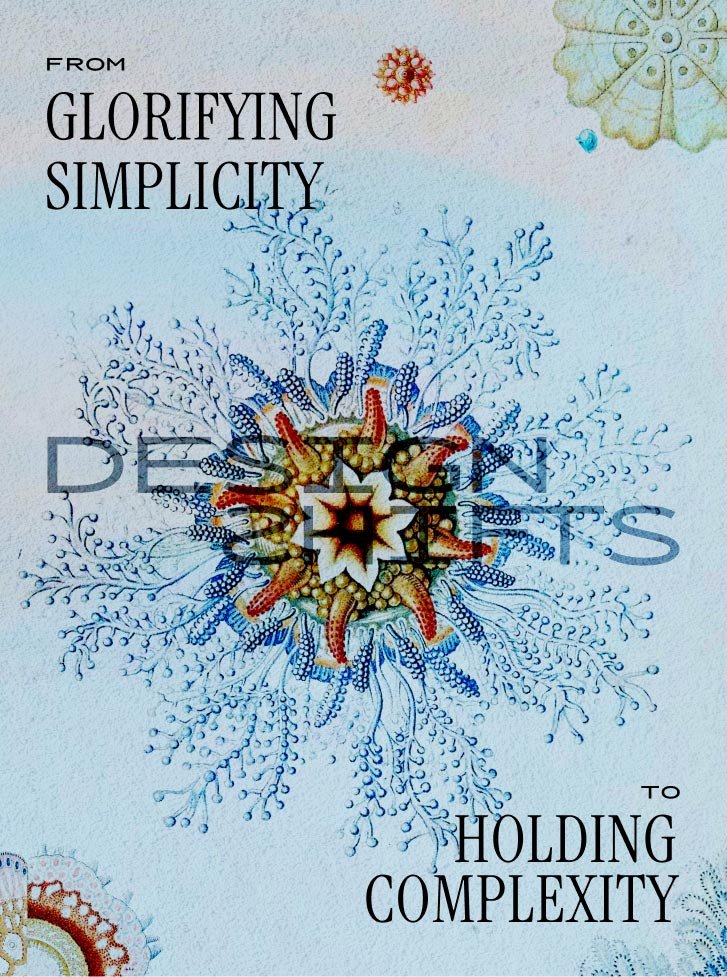
DesignShift: From Glorifying Simplicity to Holding Complexity
If we want to move from designing things to designing change, rather than simplifying the complex, we must find ways to hold and be with the complexity that exists around us and inside of us. Rather than rushing to fix, solve, or clean up, we must embrace contradictions and tensions as essential parts of the design process.
DesignShift: From Glorifying Simplicity to Holding Complexity.

DesignShift: From One Star to Many Sparks
What if… instead of centering our organizations around single stars that cast a shadow on everyone else, we created environments where many sparks together could light up the whole room?
In the book, Emergent Strategy, adrienne maree brown (amb) writes about how many of the organizations working for social change rely on one single charismatic leader. It's the rock star who is put on a pedestal and expected to solve all our problems.
The idea of a single rock star doesn’t just show up in social change organizations. Presidents, sports stars, celebrities, CEOs… all positioned as the ones who will create a better country, company, or community for all of us. It’s the water we swim in and the ripples are pervasive.
The single rock star narrative doesn’t just create a power imbalance. It also creates an environment where according to amb “Rock stars get isolated, lose touch with our vulnerability, are expected to pull off superhero work, and generally burn out within a decade.” It creates a weak system that stands or falls (which it sooner or later does) on the shoulders of one person.
DesignShift 12: from one star to many sparks.
The best missions won’t be illuminated without a depth of knowledge and a breath of people. Through distribution we can create a sustained light that illuminates every corner, not just the corner offices.

Join us!
Sign up for updates on my writing, events, and upcoming courses